Lukas Muttenthaler
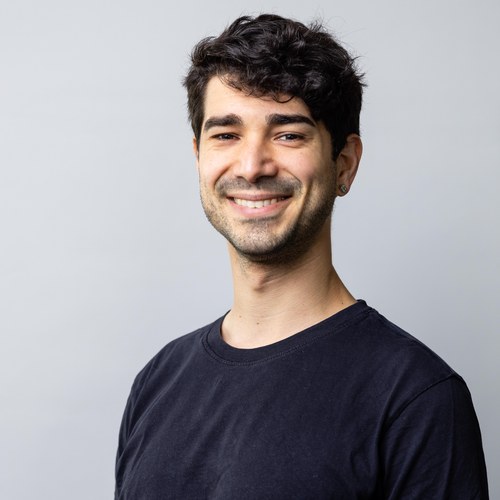
Senior Machine Learning Research Scientist at Aignostics and former part-time postdoctoral researcher in the Explainable Machine Learning Group at Helmholtz Munich & TU Munich, working on representation learning and post-training for computer vision foundation models.
Research Profile
I build interpretable vision foundation models — and study what makes them see the world the way people do.
I am a (full-time) Senior Machine Learning Research Scientist at Aignostics and a (part-time) postdoctoral researcher in the Explainable Machine Learning Group at Helmholtz Munich & TU Munich. At Aignostics, I introduced and lead the post-training research agenda for the company's vision foundation models, spanning self-supervised learning, vision–language alignment, and multi-task learning for computational pathology. Prior to that, I was a Student Researcher at Google DeepMind and a PhD student in Machine Learning at TU Berlin and the Berlin Institute for the Foundations of Learning and Data (BIFOLD). Throughout most of my PhD I have also been a guest researcher in the ViCCo Group at the Max Planck Institute for Human Cognitive and Brain Sciences. I was mainly advised by Klaus-Robert Müller (TU Berlin) and co-supervised by Martin Hebart (MPI), Simon Kornblith (Anthropic), and Andrew Lampinen (Google DeepMind). During my PhD, I've been part of a one-year Research Collaboration between TU Berlin and Google Brain, where I was advised by Simon Kornblith. Previously, I was a MSc student in IT & Cognition / Computer Science of Isabelle Augenstein and Johannes Bjerva at the University of Copenhagen where I mostly worked on Question Answering and Machine Translation.
My research mainly revolves around representation learning in computer vision. In particular, I try to understand the factors that influence the degree of alignment between human mental and neural network representations and use inspiration from human cognition to improve deep learning models. My goal is to build interpretable (vision) foundation models that generalize to downstream out-of-distribution settings (similar to how the human brain does); something that we partly achieved in this Nature paper. More recently, I have been working on foundation models for medical imaging—specifically computational pathology—where I have gained deep expertise in histopathological image analysis, foundation model post-training, and multi-task learning for H&E- and IHC-stained tissue. Beyond raw performance, I am deeply invested in questions of AI safety and alignment—a natural extension of my work on representational alignment between humans and neural networks, where understanding and controlling the internal representations of AI systems is key to building models that are interpretable, trustworthy, and aligned with human values.
Occasionally I dabble in philosophical discussions about representational alignment and try to develop common language across research disciplines together with other people in the field. Recently, I've been thinking a lot about the transferability of representational similarities across datasets. Have a look at my Google Scholar for more information about my work. Feel free to reach out to me, if you believe our research intentions are aligned (pun intended) and you are keen to collaborate on a project.
Academic Background
-
2025-2026 | Postdoctoral Researcher (part-time), Computer Vision Explainable Machine Learning Group, Helmholtz Munich & TU Munich, Germany
-
2020-2025 | PhD Computer Science / Machine Learning Machine Learning Group & BIFOLD, TU Berlin, Germany – Thesis: Representational alignment of humans and machines for computer vision
-
2021-2024 | Guest Researcher, Computational Cognitive Neuroscience ViCCo Group, Max Planck Institute for Human Cognitive and Brain Sciences, Germany
-
2020-2021 | Research Associate, Computational Cognitive Neuroscience ViCCo Group, Max Planck Institute for Human Cognitive and Brain Sciences, Germany
-
2018-2020 | M.Sc. IT & Cognition Department of Computer Science, University of Copenhagen, Denmark – Thesis: Subjective Question Answering: Deciphering the inner workings of Transformers in the space of subjectivity
-
2015-2018 | B.Sc. Cognitive Psychology Faculty of Psychology, University of Vienna, Austria
Industry Roles
-
2025- | Senior Machine Learning Research Scientist (full-time), Aignostics
-
2023-2025 | Student Researcher, Google DeepMind
Featured publications
TL;DR — Distilling human similarity judgments into vision models makes their representations more human-like across levels of abstraction — and more generalizable, robust, and sample-efficient on downstream tasks.
TL;DR — An attention mechanism that fuses features across all layers of a vision transformer rather than only the last, showing that the most useful representations live at different depths depending on the task.
TL;DR — A cross-disciplinary framework that unifies how machine learning, neuroscience, and cognitive science define, measure, and improve the alignment between representations in artificial and biological systems.
TL;DR — A large-scale study of what makes neural-network representations align with human similarity judgments, showing that the training objective and data matter more than model scale and architecture.
Software
- thingsvision — a Python toolbox for extracting activations from state-of-the-art computer vision models (180+ ★ on GitHub · 70+ citations), available on PyPI.
Media & Talks
- Google DeepMind Blog — Teaching AI to see the world more like we do (2025), featuring our Nature paper
- BIFOLD Researcher Spotlight — interview on representational alignment (2026)
- Invited talk (video) — Representational alignment of humans and machines for computer vision, MPI CBS CoCoNUT seminar (2025)
- Podcast — AI Breakdown: When Does Perceptual Alignment Benefit Vision Representations?
- Explainer video — AligNet: Human-Aligned Vision Models for Robust AI (6 min)
Service
Conference & Workshop Organization
- Organizer for the Re3-Align Collaborative Hackathon at CCN 2025 in Amsterdam
- Organizer for Re2-Align: The Second Workshop on Representational Alignment at ICLR 2025 in Singapore
- Organizer for Re-Align: The First Workshop on Representational Alignment at ICLR 2024 in Vienna
- Part of the Trainee Organizing Committee for CCN 2024 in Boston
Reviewing
News
2026
- July: We are presenting our paper Attentive Multi-Layer Fusion for Vision Transformers at ICML in Vancouver!
- May: Our paper Attentive Multi-Layer Fusion for Vision Transformers was accepted to ICML 2026! Hooray!
- March: Our paper Context Sensitivity Improves Human-Machine Visual Alignment was accepted to the Re-Align workshop at ICLR 2026 in Rio de Janeiro!
- March: Our paper Revealing Task-Dependent Layer Relevance via Attentive Multi-Layer Fusion was accepted to the Sci4DL workshop at ICLR 2026 in Rio de Janeiro!
- January: New preprint on Atlas 2 — Foundation models for clinical deployment available on arXiv!
- January: New preprint on Attentive Multi-Layer Fusion for Vision Transformers available on arXiv!
2025
- November: Our paper Aligning Machine and Human Visual Representations across Abstraction Levels was published in Nature!
- October: Our perspective Getting aligned on representational alignment was published in TMLR! Reviews are public on OpenReview and can be found here.
- October: I started as a part-time postdoctoral researcher in the Explainable Machine Learning Group at Helmholtz Munich alongside my industry work!
- September: Our work on Aligning Machine and Human Visual Representations across Abstraction Levels just got accepted into the prestigious Nature magazine!
- September: Our massive collaborative perspective and review paper on representational alignment just got accepted to Transactions on Machine Learning Research (TMLR)!
- August: I am attending CCN 2025 in Amsterdam! Come join as at the Re3-Align Collaborative Hackathon for spicy discussions on representational alignment!
- June: One paper on the conceptual differences between computer vision models and humans was published in Nature Machine Intelligence!
- June: I started as a guest researcher in the Explainable Machine Learning (EML) Group at TU Munich!
- May: Our paper on the training factors that drive the consistency of representational similarity across vision datasets got accepted to ICML 2025!
- April: I started working as a Senior Machine Learning Research Scientist at Aignostics!
- April: I successfully defended my PhD summa cum laude (“with the highest distinction”) at TU Berlin!
- February: I handed in my dissertation!
- January: I had my last day as a Student Researcher at Google DeepMind!
Show earlier news (2018–2024)
2024
- November: We updated our Perspective on representational alignment and included feedback that we received from the community over the year! Go check it out! This version is more crisp and more comprehensive.
- October: New preprint on the variables that drive the consistency of representational similarity across vision datasets out on arXiv! This was my first senior author project ever!
- September: One paper on the benefits of perceptual alignment for vision representations accepted to NeurIPS 2024 in Vancouver!
- September: My one-year research internship project at Google DeepMind about Aligning Machine and Human Visual Representations across Abstraction Levels is finally out as a preprint on arXiv! Massive team effort!
- August: I attended CCN 2024 in Boston and presented some of our most recent work on alignment in the vision space!
- August: I am back at Google DeepMind as a part-time Student Researcher!
- June: New preprint on dimensions underlying the alignment of deep neural nets with humans available on arXiv!
- June: I gave an invited talk on human alignment at the Donders Institute in the Netherlands!
- May: I am attending ICLR in Vienna as a poster presenter and workshop organizer! Hit me up!
- May: One paper accepted to CCN 2024!
- March: I finished my internship at Google DeepMind!
- March: I am serving as a reviewer for ICML 2024!
- March: I gave an invited talk at Helmholtz AI & TUM in the Human-Centered AI Lab and the Explainable Machine Learning Lab of Eric Schulz and Zeynep Akata respectively!
- January: Our paper on set learning for accurate and calibrated models was accepted to ICLR 2024! Hooray!
- January: Our Call for Papers for Re-Align: The First Workshop on Representational Alignment at ICLR 2024 in Vienna is out! We are looking forward to your submissions! Submission deadline is February 3rd.
2023
- December: Our workshop proposal on representational alignment was accepted to ICLR 2024! See y’all in Vienna!
- October: I gave an invited talk on human alignment of neural network representations in the lab of Mariya Toneva!
- October: One workshop proposal on representational alignment submitted to ICLR 2024!
- October: I am serving as a reviewer for ICLR 2024!
- October: I’ve started working as a Student Researcher @ Google DeepMind!
- September: Our paper on improving neural network representations using human similarity judgments was accepted to NeurIPS 2023! Hooray!
- August: I am presenting work on interpretable object dimensions at CCN! Hello Oxford!
- August: I gave an invited talk on human alignment of neural network representations at the Max Planck Institute for Human Cognitive and Brain Sciences!
- July: Our workshop proposal on representational alignment was unfortunately rejected at NeurIPS 2023 but we will not give up and re-submit a revised version to ICLR!
- July: I am serving as a reviewer for NeurIPS 2023!
- July: I gave a spotlight talk on human alignment of neural network representations at the annual BIFOLD retreat!
- June: New preprint on set learning for accurate and calibrated models available on arXiv!
- June: New preprint on improving neural network representations using human similarity judgments available on arXiv!
- May: Paper on interpretable object dimensions in Deep Neural Nets accepted to CCN 2023! See y’all in Oxford!
- May: One workshop proposal on representational alignment submitted to NeurIPS 2023!
- May: Two papers submitted to NeurIPS 2023!
- May: I am presenting our paper on human alignment of neural network representations virtually at ICLR 2023!
- January: Paper on human alignment of neural network representations accepted to ICLR 2023 in Kigali, Rwanda!
2022
- October: Paper accepted to the SVRHM workshop @ NeurIPS 2022!
- October: I gave my first ever Machine Learning lecture at TU Berlin!
- September: One paper submitted to ICLR 2023!
- September: Our paper on Variational Interpretable Concept Embeddings (VICE) was accepted to NeurIPS 2022!
- September: I received a Google Research Collabs grant with Simon Kornblith to work on human alignment (80.000 USD research funding + 10.000 USD Google Cloud credits)! I will be commencing the collaboration as part of the Google Research Collabs Cohort 2022/23 in November!
- July: I was awarded 1,000 USD as part of the Google Cloud Platform research credits programme for working on long-tail image classification with Thomas Unterthiner!
- May: One paper submitted to NeurIPS 2022!
- February: Abstract on interpretable object dimensions in DNNs accepted as an oral to VSS 2022!
- February: I was accepted into the Berlin Institute for the Foundations of Learning and Data (BIFOLD) to continue my PhD studies at TU Berlin with a fully-funded position!
2021
- September: Paper on my Python toolbox thingsvision for extracting features from state-of-the-art computer vision models accepted to Frontiers in Neuroinformatics!
- July: As of July 1st, I am a PhD student in the Machine Learning Group at TU Berlin, working on cognitively-inspired Machine Learning! Excited to continue my journey at the intersection of ML and Cognitive Science; this time with a stronger emphasis on ML than on CogSci.
2020
- September: Paper on Unsupervised QA Evaluation of Transformers with my previous MSc. supervisors Isabelle Augenstein and Johannes Bjerva accepted to BlackBoxNLP @ EMNLP 2020!
- August: I started as a full-time Research Assistant (RA) in the Vision and Computational Cognition Group at the Max Planck Institute for Human Cognitive and Brain Sciences in Leipzig, Germany. Excited to start working at the intersection of Machine Learning and Cognitive Neuroscience!
- June/July: In June I successfully defended my MSc thesis on Subjective Question Answering and in July I graduated with distinction from the University of Copenhagen (UCPH).
2019
- November: Our paper on Assisted Declarative Process Creation from Natural Language Descriptions won the Best Demonstration Award at EDOC 2019!
- September: Paper on Assisted Declarative Process Creation from Natural Language Descriptions accepted to the 23rd IEEE International Enterprise Distributed Object Computing Conference (EDOC 2019)!
- July: I started working on NLP for law documents as a Research Assistant (RA) in the Department of Computer Science at the University of Copenhagen.
- June: Our algorithm that won the PAN autorship attribution competition at CLEF 2019 was featured in the CLEF 2019 Working Notes!
- May: Our team won the PAN authorship attribution competition at CLEF 2019 in Lugano, Switzerland!
- February: Paper on Visual Working Memory from my time as a research intern during my BSc accepted to Frontiers in Psychology!
- January: Paper on Amblyopia from my time as a research intern during my BSc accepted to the Journal of European Psychology Students (JEPS)!
2018
- June: I was admitted to the IT & Cognition MSc programme at the University of Copenhagen. Excited to start working on Natural Language Processing in Copenhagen! I will be starting my studies in September.